|
|
| |
 |
| |
| |
|
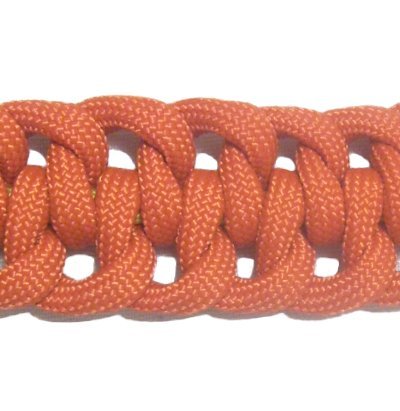
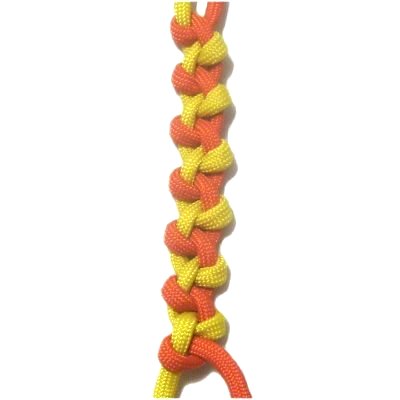
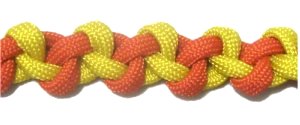
Description: The Alternating
Half Hitch is a very common knotting technique
used in Macrame projects. It has a
chain-like appearance, and is narrower than most
sennits made with other knots.
In some vintage patterns, the name of this
knot is the Chain Stitch. In
more modern texts, this design is sometimes
called the Zigzag Braid.
This decorative knot can be used to make a
simple bracelet or necklace. Belts,
handbag straps, jump ropes, and other long items
can be made with a sennit like this.
The key to success for this design is to work
with the flat or round shape of the cord
material, so the Half Hitches are not twisted or
kinked.
|
| |
|
|
|
|
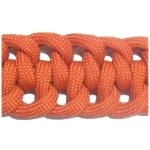
Half
Hitch Patterns are
variations of the Alternating Half
Hitch. Each of the designs on that
page require a separate
holding cord.
The working cords are used to tie the
knots onto the holding cord, instead
of each other. |
|
|
|
|
|
|
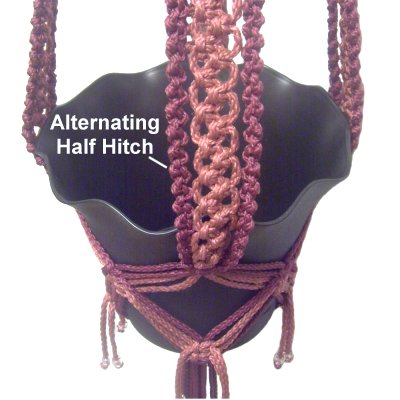
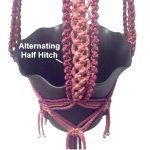
The Two
Tone Planter is a Macrame
project
where the Alternating HH technique is
featured. The long, slender sennits
resemble chains.
Click on the link
to view the pattern.
You can see a larger image by clicking on
the photo. |
|
|
|
|
| |
Step 1:
To practice, you need two cords at least 12 inches
long. Secure them vertically to your project
board. I recommend you use two colors when
practicing.
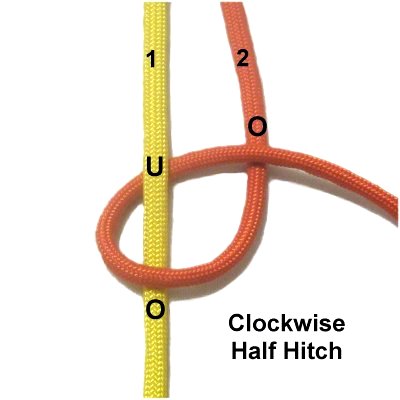
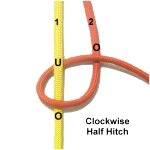
Cord 1 (on
the left) is the holding cord for the first step. |
| |
| |
 |
|
Make a clockwise
loop with cord
2, passing around
holding cord 1 over
- under.
As you pull it to the right, pass over
cord 2.
Tighten the first Half Hitch so it
grips the holding cord firmly. It helps
if you pull the holding cord so it has
tension.
|
|
| |
|
| |
 |
|
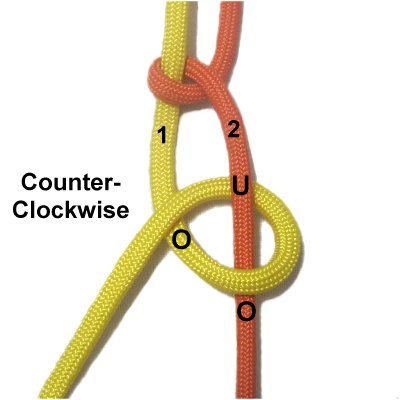
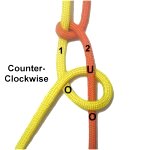
Step 2: Now you
alternate the cords:
Make a counter-clockwise
loop with cord
1, passing over
- under cord 2.
As you pull it to the left, pass over
cord 1.
Pull the end to tighten.
|
|
| |
|
| |
 |
|
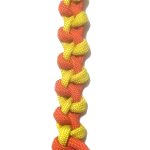
Step
3: To continue, alternate back
and forth between the two cords to tie
more Half Hitches.
Designer's
Tip: Try to tighten each of
the Half Hitches the same amount, to keep
the sennit the same width all the way
down. |
|
| |
| |
|
|
|
By
using any text or images on Free Macrame
Patterns, you are agreeing to our Terms
of Use
|
|
|
|
| Have
any comments about the Alternating Half Hitch? Contact
Me. |
|
|
|

|
|
|
| |