The Macrame Beads described on this page are
commonly used for Macrame projects made with 3mm to 8mm materials.
There are also tips about sizing, preparation, and
techniques.
The most important feature to focus on when
purchasing beads for Macrame is the hole
size. You also need to consider the
width of the material, how many cords pass through
the beads, and how flexible the material is.
The overall size (length) has an impact on how the
beads look in your project. Large, chunky beads on
slender cords won't be attractive. You need
to find a balance between the bead size and the
design of your project.
Micro-Macrame Beads
are now on
a separate page, since they have different
features.
The beads described are used for projects
requiring cord 0.75mm
to 2mm in size. (Click on the link to
visit the page).
Wood Beads
The most
common type of beads used for Macrame are
those made with wood.
They range in size from 10mm to 50mm in
length.
The holes are usually 4mm to 12mm in
diameter.
Beading
Tip 1: Remember that cord material
is flexible, so it compresses.
You can usually get more cords through a bead than
you think.
This
is how to determine the hole size you need:
Multiply the width of the material X the
number of cords passing through the
beads.
Multiply by 0.5. The result is the
minimum hole size required for the number of
cords you are using.
Keep in mind that inflexible, thick
materials require larger holes. You may need
to multiply by 0.75 for some types of 6mm
material.
Example:
Four 4mm cords = 16mm. Multiply by 0.5 =
8mm.
So 4 cords of 4mm size will usually fit through
beads with 8mm holes.
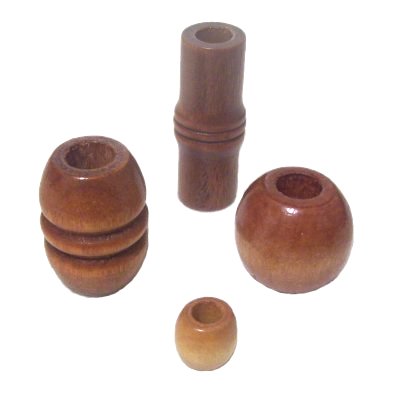
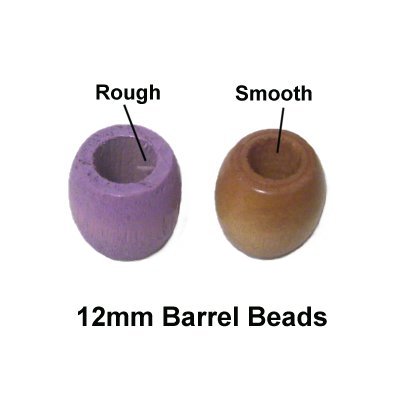
Barrel
beads are a great option when
making Macrame projects. They are
usually 10mm to 12mm long with 4mm or 5mm
holes. They are sometimes called
"Pony Beads".
One 6mm cord can fit through a 5mm hole,
making them a great choice for beaded
fringe.
Beading
Tip 2: The INSIDE of all Macrame
beads should be as smooth as possible.
Before using, clean the interior with a piece of
cloth material. Inspect the wood for chips
or pieces sticking out from the surface. Sandpaper
can be used if the inside is rough.
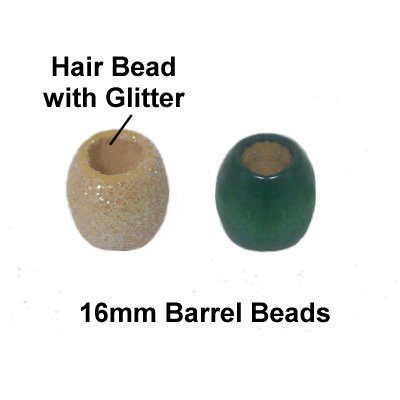
Barrel beads
also come 15mm - 16mm sizes.
These are sometimes used for hair styles,
and can be found with glitter.
The hole size is usually 8mm.
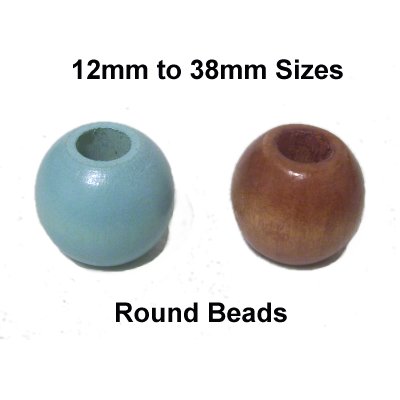
Round
beads come in sizes ranging from
10mm to 38mm.
The hole sizes are usually 4mm to 10mm.
Several sizes of wood beads can be found
at the MACRAME SUPERSTORE.
Round beads with average size holes of 8mm are
often much larger in overall size than what you
would find with other shapes. I've
seen big 30mm round beads with tiny holes of
4mm.
Beading
Tip 3: When purchasing, make sure
the hole size is specified in the description, or
ask for a measurement.
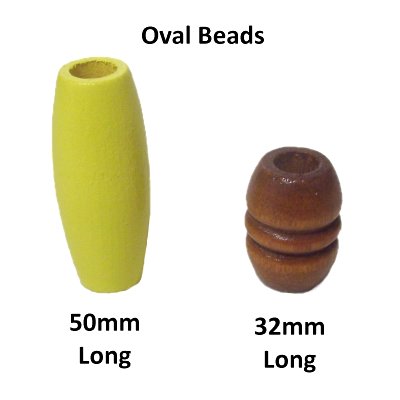
Oval
beads are often used in plant
hanger patterns.
The most common lengths for these Macrame
beads are 32mm and 50mm.
The hole size is usually 8mm to 10mm.
Beading
Tip 4: Narrow beads like the ones
shown above and below can be a challenge to use on
flexible materials.
Cotton, for example, is so flexible that long
beads are difficult to thread. You may need
to stiffen cotton with glue, or apply tape.
Beading Tip 5:
The best way to apply any bead is to place the tip
of the cord into the hole just past the outer
surface. TWIST the cord as you push it through.
When using multiple cords, pass them through one
at a time.
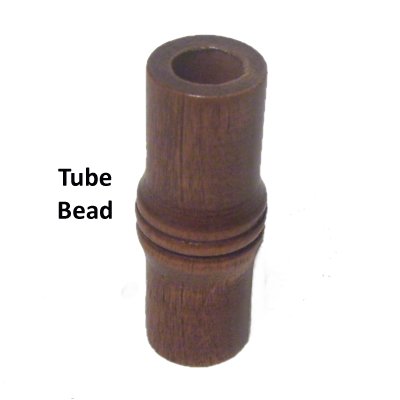
Tube
beads are not seen very often in
Macrame patterns, but they are a good
option.
The length is usually over 30mm, with hole
sizes of 4mm to 8mm.
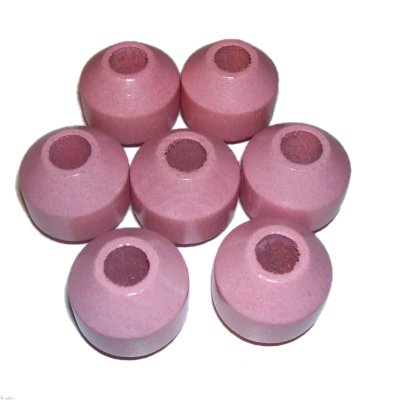
Beveled
beads for Macrame range in size
from 30mm to 40mm long. The hole
sizes are 8mm to 12mm.
Chunky beads, like the ones shown here,
look better in designs made with 6mm size
cord materials.
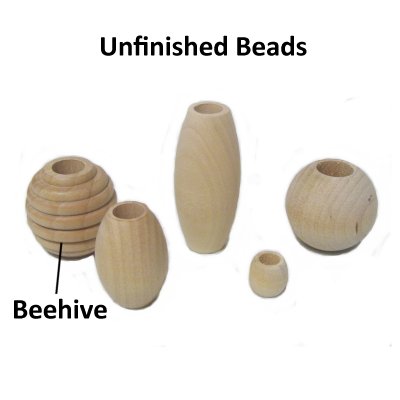
Unfinished
Wood Beads are unique in that you
can apply stain or paint to match your
project.
They come in the same shapes and sizes as
other Macrame beads, as well as some
unusual shapes like the Beehive bead shown
here.
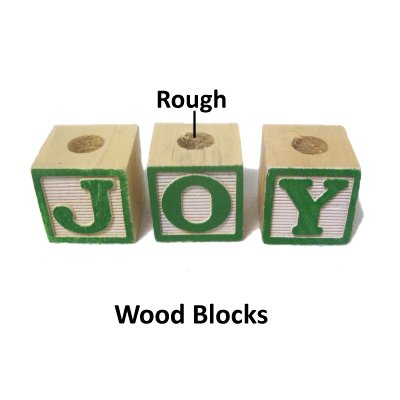
Blocks
can also be used in Macrame
projects.
Most of ones I've seen were not smooth
inside and required sanding.
The holes are often 10mm, and can be made
larger with sanding.
Other Types of Macrame Beads
You can use other types of beads for Macrame
projects. Some might be a surprise to you,
but they all have suitable hole sizes:
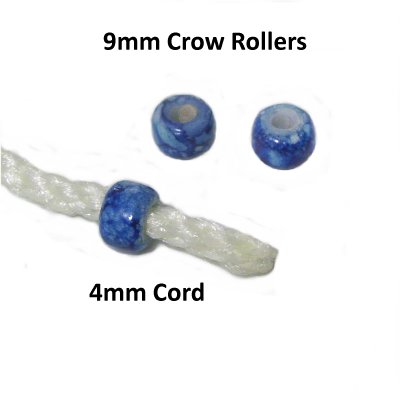
Crow
Rollers are often overlooked in
favor of other types. The holes are
usually large enough for 3mm and 4mm cords
to pass through.
These 9mm size glass crows are the perfect
size for beaded fringe made with 4mm
cord material.
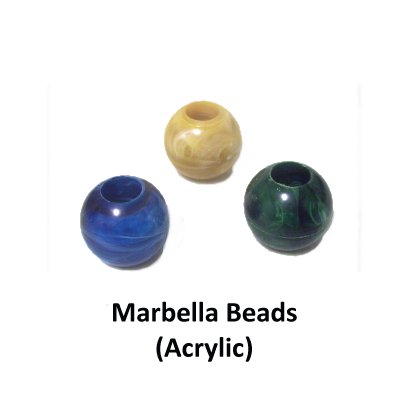
Marbella
Beads are made from a type of
acrylic material that has swirls
resembling marble.
These were frequently made specifically
for Macrame in the 1970's, and you can
still find them today.
The hole size is usually 8mm - 10mm.
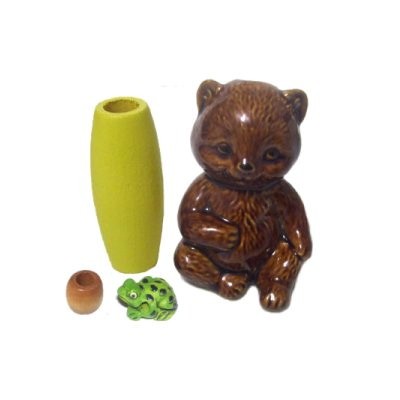
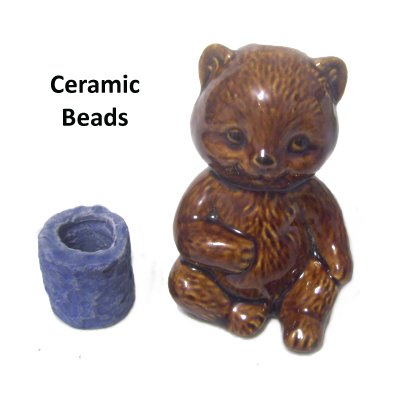
Ceramic
Macrame Beads were also
specifically made for this craft.
They are hard to find, since they are no
longer being manufactured.
You can find basic shapes as well as
figures. The best place to look for
them is online, especially EBAY.
The hole sizes are usually 8mm to 15mm.
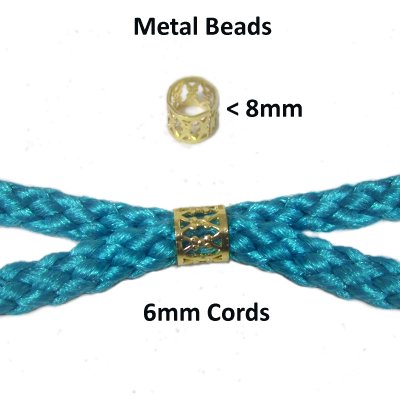
Metal
Beads with large holes are hard
to find. The beads shown here are
made from very thin brass metal, so the
hole size is the same as the overall size
(8mm).
Two 6mm cords easily passed through, but
it was difficult to see them from a
distance.
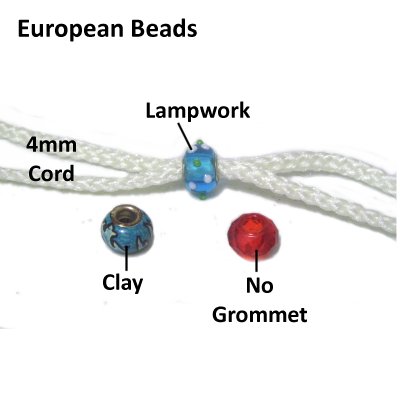
European
Beads, sometimes called Pandora
beads, have 5mm holes, suitable for 3mm -
4mm material.
There is a silver or gold grommet lining
the inside of the hole. You can find
them without the grommets,
too.
Most are glass lamp work beads, but you
can find clay and gemstone styles as well.
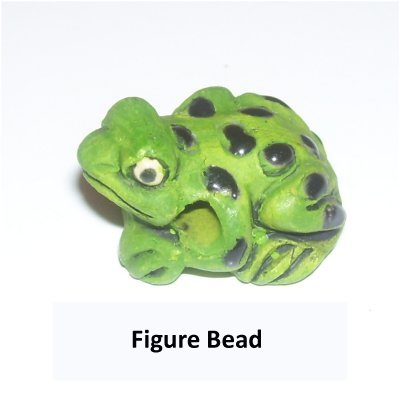
Ceramic
Figure Beads sometimes have large
holes suitable for 3mm to 4mm materials.
This frog has a hole size of 3mm, which is
the average size for this type of bead.
SHIPWRECK BEADS has a great
selection of Peruvian ceramic beads
(including this frog).
By
using any text or images on Free Macrame
Patterns, you are agreeing to ourTerms
of Use