Cross Knot
|
| |
 |
| |
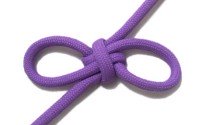
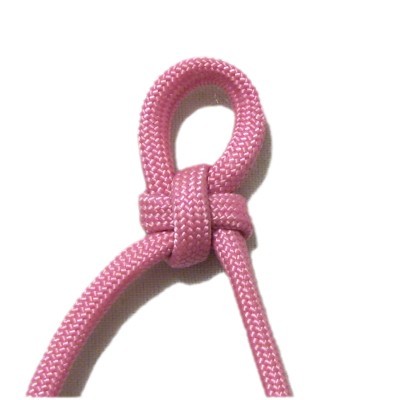
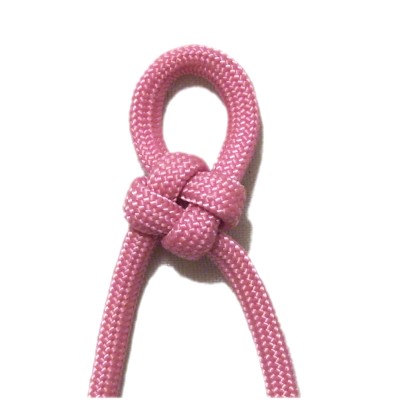
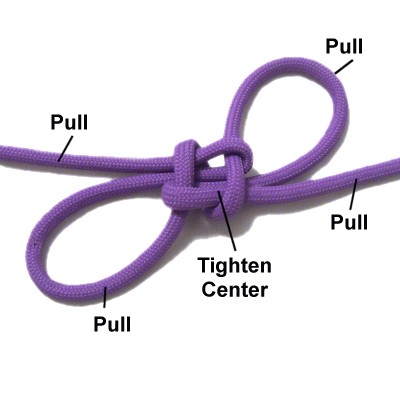
| Description: The Cross Knot is one of the easiest Chinese Macrame techniques.
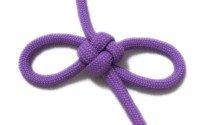
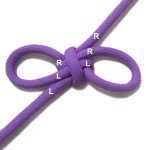
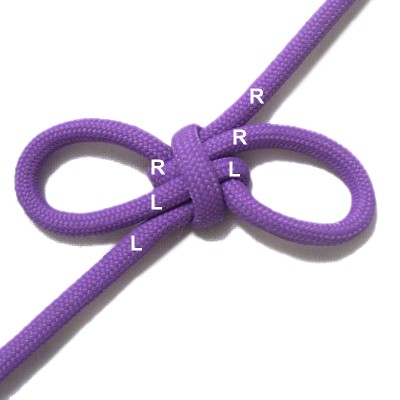
On one side, it looks like a cross, on the other side, a diamond
shape. You can tie alternating rows to make a really beautiful
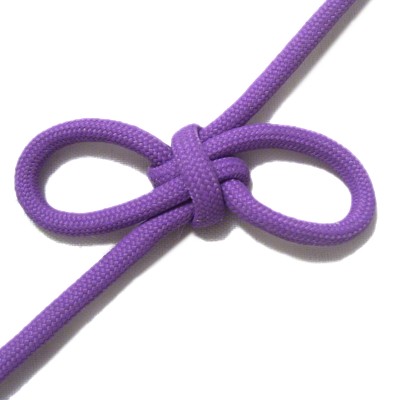
pattern. Other names for it include the Square Stitch and the Compass Knot, which are constructed a bit differently. I've included all three variations in these instructions.
Variations: Diamond Stitch and Compass Knot |
| |
| |
| |
 |
|
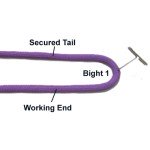
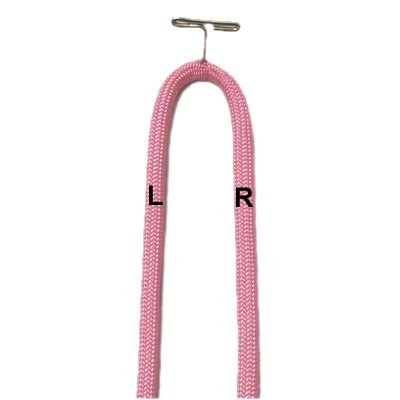
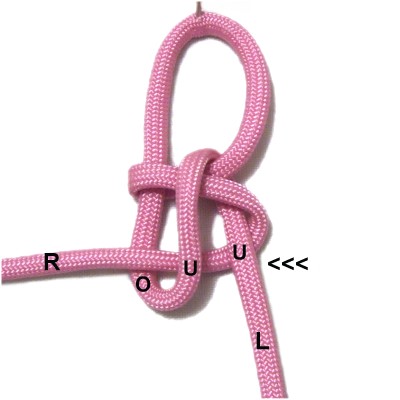
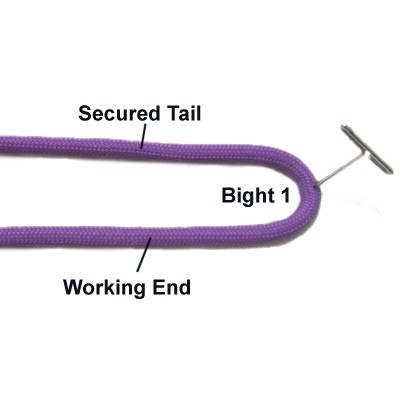
Step 1: To practice, obtain a single length of cord at least 30 inches long. Find the center, fold the strand in half, and secure it to your work surface or Project Board.
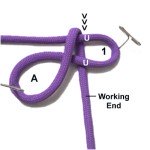
Step 2:
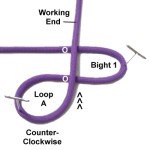
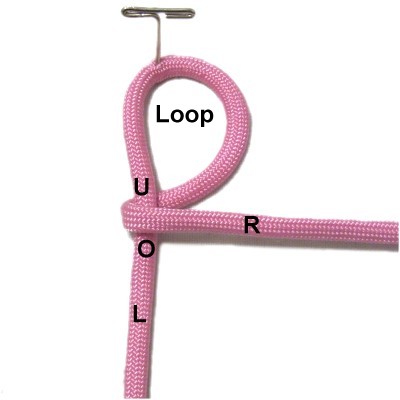
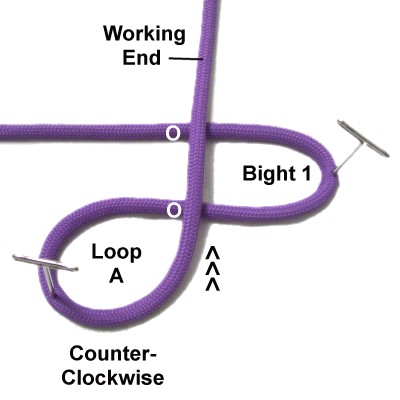
Take the right portion of the cord and bring it under the left,
making a “P” shaped loop. Bring the cord over and
back towards the right. |
|
| |
| |
 |
|
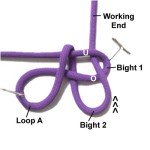
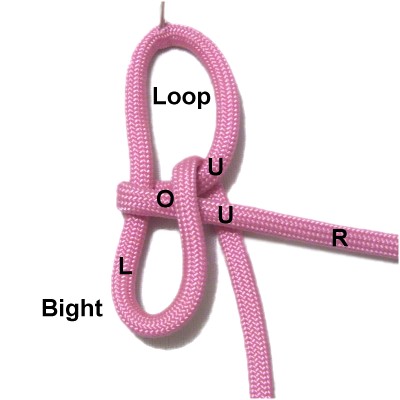
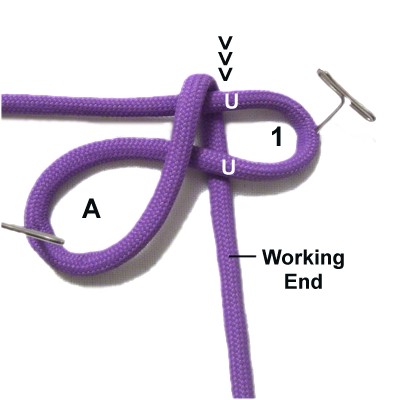
Step 3: Take the
left end and bring it up through the loop. Head back down to
the bottom, going under the coils. Secure the end temporarily. |
|
| |
| |
 |
|
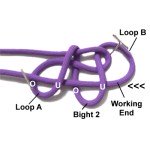
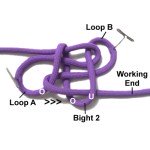
Step 4: Switch
to the right end again, directing the cord under the two coils
as you move left. Direct the end through the small loop on the
bottom left portion of the knot,from below. |
|
| |
| Step 5:
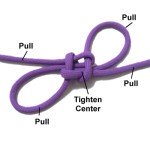
Hold both ends in one hand, and the large loop in the other.
Pull gently, and with equal force, to tighten the Cross knot. |
| |
|
| |
 |
| |
Diamond Stitch Variation
The Diamond Stitch takes advantage of the design on the back
of the Cross Knot. It’s tied a bit differently, though,
and does not have a loop. In some books on Vintage Macrame,
it’s found under the name Square Stitch, which can get
a bit confusing, particularly if your pattern calls for Square
Knots as well as this technique. See the Vintage
Basket for a pattern that uses this unique decorative knot.
Step 1: To practice, mount 2 cords in some
manner, to a ring or holding cord. You can tie this knot on
a flat surface, or with the strands dangling freely. |
| |
| |
 |
|
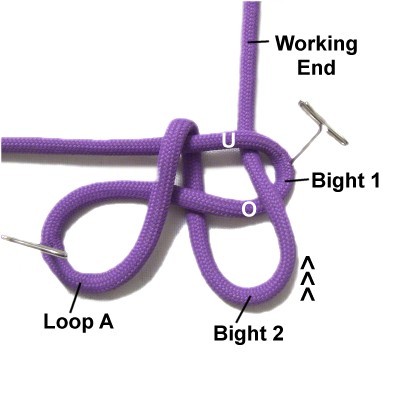
Step 2:
Use the left cord to make a vertical “S”
shape (Blue cord in image). The first downward loop is #1, and
the second loop going upward is #2. |
|
| |
| |
 |
|
Step 3: Now take
the right cord (Purple cord in image) and direct the end through
loop #2 horizontally, making sure you go into it from below.
Pass over the coil on the left. In other words, moving from right to left, it's under - over - over. |
|
| |
| |
 |
|
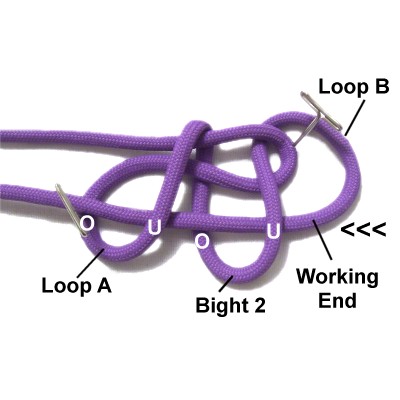
Step 4: Come around
through loop #1 from below, and under
the coil furthest to the right. Another way to look at it is under - over - under (left to right). |
|
| |
| |
 |
|
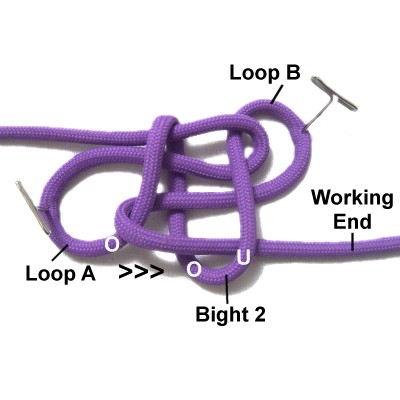
Step 5: Now
direct the end back into loop #1, but from the top of it this
time. As you do so, you’ll pass over the coil on the
right. In other words, over - over - under (right to left).
Step 6: Tighten the knot gradually. It’s
best to leave it a little loose, so the design is seen more easily. |
|
| |
| |
|
| |
| |
 |
| |
| |
Compass Knot |
| |
| Here are the instructions to make the Compass Knot, which is another variation of the Cross Knot. It's constructed differently from both the Cross Knot and the Diamond Stitch, but is the same decorative knot. This variation is especially useful to know if you want the knot to stand alone, rather than among other knots. You can click on the icons to see larger images, which will come up in a new window. |
| |
| Step 1: You need 2 cords, at least 12 inches long, to practice. Make sure they are different colors when you first begin learning this second variation of the Cross Knot. Color A in these instructions is Tan, and Color B is the Lavender cord. |
| |
| |
 |
|
Lay them down on your project board or table so Color A is vertical (up and down), and Color B is horizontal (side to side). Color B should be on top, and the centers should be matched up. |
|
|
| |
| |
 |
|
Step 2: Take the left end of the Color B cord, and direct it towards the right, moving clockwise. It should come to rest below the right end. Make sure it passes over the Color A strand. |
|
|
| |
When finished, there should be a medium sized loop on the left of the vertical Color A cord. Secure the end to your table or project board with a pin or tape.
Tip: Even though the Cross Knot and Compass Knots are easy to tie, it's a good idea to use a project board and pins. When you are first learning Macrame, controlling the cords can be a real challenge. I like to use tape, but pins work well, too. |
| |
| |
 |
|
Step 3: Take the lower portion of the vertical Color A strand and direct it upward, forming a loop. It should rest to the right of the other end. This is similar to what you did in the previous step. Make sure the end passes over both parts of the Color B cord. Secure the end to your work surface. |
|
|
| |
| |
 |
|
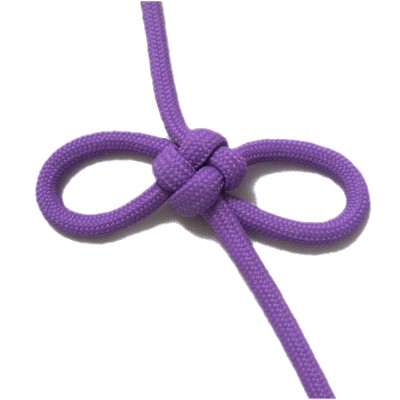
Step 4: Go back to the Color B cord and use the opposite portion that you worked with in step 2. It’s the top part of the cord, not the secured bottom part. Direct it to the left, passing over both parts of the Color A cord. By now it should look like an S shape. Secure this end to your work surface, too. |
|
|
| |
| |
 |
|
Step 5: Use the opposite portion of the Color A cord that you used in step 3. It the one resting on the left, that is not secured. Direct it down to the bottom of the design, passing over the first 2 coils of the Color B cord near the top. Pass under the third coil at the bottom. |
|
|
| |
| Step 6: Tighten the Compass knot gradually, by pulling on the ends. |
| |
| |
| |
 |
| |
Searching for Macrame Supplies ? I have developed an online store for those visiting Free Macrame Patterns. Simply click on any of the Acajou banners, like the one below.

|
| |
 |
Have
any comments or suggestions about the Cross Knot? Contact
Me.
Back
To Learn Macrame
|